The Performance Equation: Why Elite American Executives Treat Personal Fulfillment as a Professional Asset
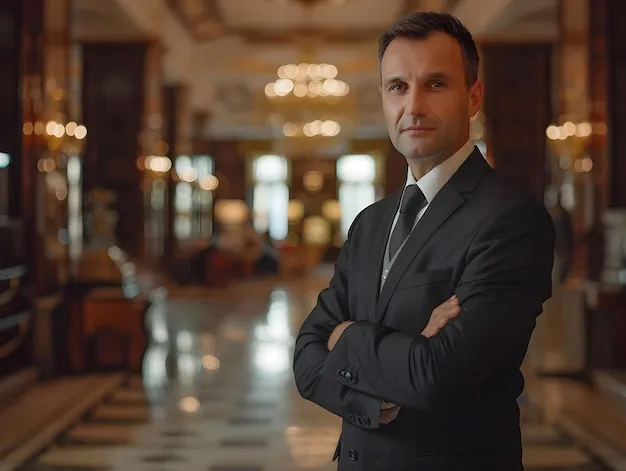
Photo: confident American executive in luxury hotel business travel Asia professional presence, via img.freepik.com
There is a particular kind of confidence that cannot be manufactured in a boardroom or cultivated through another leadership seminar. It arrives, instead, from a life that feels genuinely complete—one in which professional ambition and personal satisfaction are not competing forces but complementary ones. For a growing cohort of high-achieving American executives, this understanding has quietly reshaped how they approach travel, downtime, and the intentional management of their own psychological states.
The question is no longer whether personal well-being affects professional performance. The research on that point is settled. The more nuanced conversation now centers on how sophisticated professionals choose to invest in that well-being—and why the most effective among them treat those investments with the same strategic deliberation they apply to a capital allocation decision.
The Science Beneath the Surface
Executive coaches and organizational psychologists have long recognized what they sometimes call the "presence gap"—the measurable difference in persuasive authority and interpersonal effectiveness between leaders who are personally fulfilled and those who are running on empty. Studies in applied positive psychology, including foundational work by researchers at institutions such as the University of Pennsylvania and the Harvard Business School, consistently demonstrate that emotional satiation directly enhances cognitive flexibility, empathy, and the capacity for nuanced judgment.
In practical terms, this means that an executive who arrives at a critical negotiation feeling personally grounded and socially connected is neurologically better equipped to read the room, manage ambiguity, and project the kind of assured calm that moves others to action. Stress hormones, particularly cortisol, suppress precisely those prefrontal functions that distinguish exceptional leaders from merely competent ones. Fulfillment, by contrast, activates the parasympathetic nervous system and restores the mental bandwidth that high-stakes decisions demand.
For executives traveling internationally—navigating time zones, cultural unfamiliarity, and the ambient isolation that often accompanies extended business travel—these dynamics are amplified considerably.
Companionship as a Strategic Variable
Among the personal investments that elite professionals make, genuine human connection consistently ranks among the highest-impact. This is not a sentimental observation; it is a well-documented physiological reality. Social bonding triggers oxytocin release, reduces inflammatory markers associated with chronic stress, and measurably improves sleep quality—all of which translate directly into sharper performance the following morning.
For American executives who travel frequently to cities like Pune, the challenge is not a lack of desire for connection but a structural deficit of opportunity. Professional obligations consume the majority of available hours. Social networks at home are geographically inaccessible. The transient nature of business travel makes organic relationship-building both time-consuming and logistically impractical.
This is precisely where elite companion platforms serve a function that is, at its core, deeply rational. By providing access to cultured, engaging, and professionally discreet companions, these platforms allow high-performing individuals to satisfy a genuine human need without the inefficiencies, uncertainties, or emotional complications that might otherwise accompany the attempt. The executive's time is protected. The experience is tailored. The psychological dividend is real.
Reframing the Private Investment
One of the more persistent cultural obstacles for American professionals in this space is the residual discomfort with treating personal fulfillment as a legitimate line item in one's self-management strategy. American professional culture has long valorized a particular brand of stoic self-sufficiency—the leader who needs nothing, sacrifices everything, and draws sustenance from work alone. The research, however, paints a strikingly different portrait of sustainable high performance.
The executives who maintain effectiveness across decades, rather than burning brightly and collapsing, are almost universally those who have developed what psychologists term "restorative routines"—deliberate practices that replenish the emotional and cognitive resources that professional life depletes. For some, this means meditation or physical training. For others, it means the intentional cultivation of personal connection, warmth, and intimacy during periods of professional intensity.
None of these investments diminish professional stature. Properly managed, they enhance it. The executive who returns from an evening of genuine companionship—relaxed, appreciated, and personally restored—does not arrive at the next morning's meetings diminished. He or she arrives present, focused, and operating at full capacity.
Discretion as Infrastructure
For this model to function effectively, discretion is not merely a preference—it is a structural requirement. The psychological benefits of personal fulfillment are contingent on the absence of anxiety about exposure, judgment, or reputational consequence. An executive who spends the evening in enjoyable company but spends the night worrying about whether that choice will surface in an unwanted context has not made a restorative investment. He has created a new source of stress.
This is why the sophistication of the platform through which such arrangements are made matters enormously. Elite companion services in Pune—those designed with the specific expectations of the American professional traveler in mind—understand that their primary product is not merely companionship. It is confidence: the assurance that an arrangement made in private will remain private, that the companion engaged is both trustworthy and genuinely engaging, and that the entire experience will unfold with the efficiency and professionalism that a high-performing individual expects from any premium service.
Pune Companions was built around precisely this understanding. The platform's design philosophy reflects a recognition that the American executive market demands not only quality but certainty—certainty of discretion, of compatibility, and of the kind of seamless experience that leaves no administrative residue to manage afterward.
The Integrated Executive
The most effective leaders of the current era are those who have moved beyond the false binary of professional and personal, public and private, productive and restorative. They understand, often through hard-won experience, that sustainable excellence requires the whole person to be functioning well—not just the professional persona that appears in conference rooms and on earnings calls.
Investing in personal fulfillment during international travel is not a departure from professional seriousness. It is, for those who approach it thoughtfully, one of its most sophisticated expressions. The executive who understands what he or she needs to perform at the highest level—and who takes deliberate, discreet steps to ensure those needs are met—is exercising exactly the kind of self-awareness and strategic thinking that distinguishes great leaders from good ones.
In Pune, as in any city that hosts the world's most demanding professionals, that investment is available. The question is simply whether one chooses to make it.